
Focus Group Alternative: A Simple Guide to Getting Real Customer Answers Faster
 Nehan Mumtaz
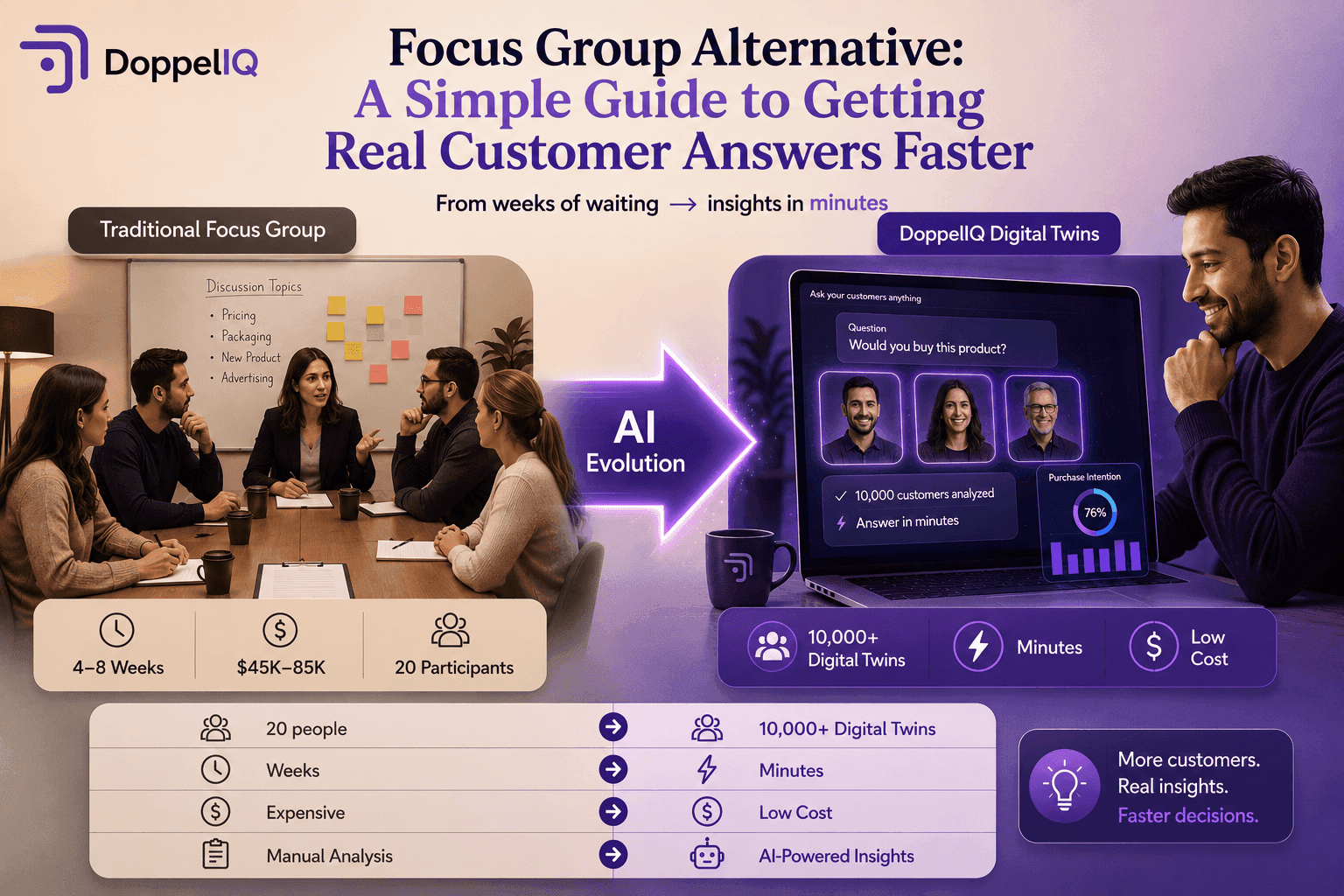
Picture this. You want to know if your customers will like a new discount you're thinking about launching. The old way is to book a room, fly in twenty strangers, pay them to sit around a table, and wait six weeks for a report. By the time you get the answer, the holiday season you were planning for is already over.
That is the problem with the classic focus group. It is not that talking to customers is a bad idea. It is that the format is slow, expensive, and built for a world that moves a lot faster than retail does today.
This guide walks through what a real focus group alternative looks like in plain English, no confusing terms, no tech-speak. Just what works, what does not, and what a smart retail marketer should actually use.
Why the old focus group struggles today
Think of a traditional focus group like asking twenty people to test drive a car before your whole company decides which car to buy. It sounds thorough. But it takes weeks to schedule, costs a small fortune, and by the time everyone is done, you only got the opinion of twenty people who may not even shop the way your real customers do.
Here is what that actually costs in dollars and time. Full studies from top research firms often run $45,000 to $85,000 and take four to eight weeks from the first phone call to the final report. If you have run one, you already know the pain of figuring out what a survey really costs before you even get useful answers.
And that is if people actually respond. A lot of them do not. Email surveys today get opened and finished by a shockingly small slice of the people you send them to, which is one reason survey response rates keep dropping every year. The people who do answer are often the most opinionated ones, not your average shopper, which quietly skews your results before you even open the report. That is just one of the common types of survey bias that quietly ruin your data.
The new wave of AI focus groups, and why most of them are still guessing
In the last couple of years, a bunch of AI tools showed up promising to fix this. They build fake customers using artificial intelligence and ask them questions instead of real people. Sounds great, right? Faster, cheaper, no waiting room.
Here is the catch most people miss. Most of these tools build their fake customers from the same place: the open internet or third party data. Think of it like asking a stranger who has never shopped at your store to guess what your regular customers want, based only on things they read online about "deal seekers" in general. They will give you a reasonable-sounding answer. It just will not be about your customers. It will be a guess dressed up to sound confident.
That is why so many synthetic respondents are being called the future of market research, but the quality swings wildly depending on what data built them. A synthetic shopper built from Reddit posts and marketing blogs is not the same thing as a synthetic shopper built from your actual store's checkout data. One is a stereotype. The other is your customer.
What changes when the AI actually knows your customers
This is where DoppelIQ Enterprise works differently. Instead of guessing based on internet chatter, it builds each digital twin, a virtual copy of your real customer, using your own data. That means your loyalty program history, past purchases, customer service chats, and survey answers, all feeding into one accurate model of who your shoppers actually are.
Think of the difference like this. A generic AI persona is like a sales clerk who has never worked at your store, trying to guess what your regulars want. A DoppelIQ twin is like your best, most observant store manager, the one who remembers that Mrs. Rodriguez always waits for a 20 percent off sale before buying detergent, and that the dad in aisle six only buys the brand his kids will actually eat. That kind of specific knowledge cannot be guessed. It has to be learned from real behavior. You can see the full picture in this complete guide to digital twins for instant, cost-effective consumer research.
It also does not just spit out a one-word answer. It shows its work, pointing to the actual buying habits and past feedback that shaped the answer, so you are never left wondering where a number came from. Here is a real example of what that looks like when you ask a twin an open question, the same kind a moderator would ask in a focus group room.
Question asked to the twin: What factors influence your purchasing decisions?
Convenience:
I prefer shopping online only, mostly in the evening when I have time.
I shop from my favorite branch, Alaliah Plaza, which makes delivery or pickup easier.
Weekend orders make up over half my shopping, fitting my family’s schedule.
Deals and Discounts:
I’m a growing deal hunter, so discounts influence me a lot.
I use discounts about 27% of the time to save money.
I plan my shopping to catch good deals and maximize value.
Product Categories:
I spend most on fresh fruits and vegetables (about 41% of my spend).
Other important categories include oil & ghee, dairy & eggs, chocolate, and breads & rolls.
I focus on essentials like fresh lemon, bran bread, olive oil, eggs, and sweeteners.
Brand Trust:
I prefer trusted brands like Panda, Fonte, and Miza.
Panda is my top brand, which I rely on for quality and consistency.
Notice there is nothing vague in that answer. Real numbers, real brand names, a real reason for every decision which is grounded in real 1st party data. That is what happens when the model has actually seen this shopper's receipts instead of guessing.
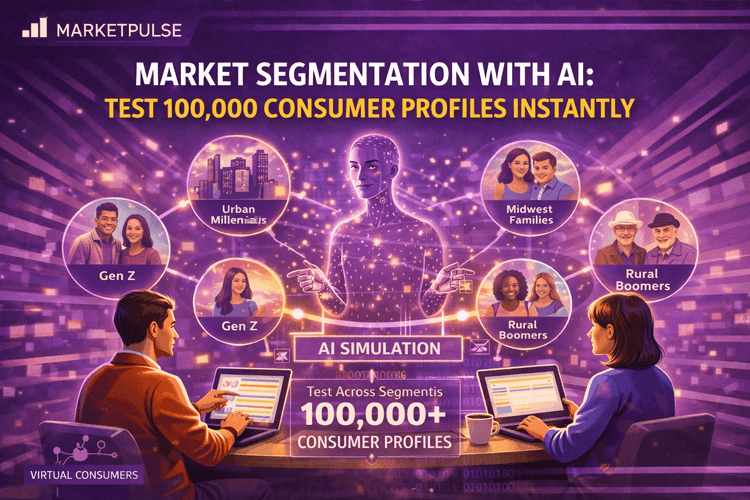
Now multiply that by thousands. You can ask the same depth of question across 10,000 or more of your real customers at once, broken into whatever groups matter to your business, like age, region, or spending habits, the same way you would sort customers with AI-powered market segmentation. No single focus group room could ever hold that many people, let alone pay for their time.
No more waiting weeks for an answer
Here is the part retail marketers care about most. Once your twin is built, asking a new question is like texting a friend, not planning a family reunion. You do not need to book a room or wait for people to show up. You type your question, and you get an answer in minutes.
That changes how often you can check in with your customers. Instead of one big study a quarter, you can ask something new every week. Did the discount work? Are people excited about the new packaging? What do shoppers think of this ad? You can even test how customers might react to a new product idea before you spend a dollar building it, which is exactly what concept testing without running a single survey looks like in practice. This kind of on-demand answer is a big part of why waiting weeks for a survey is quickly becoming a thing of the past, and it fits into a bigger shift retailers are making with their whole approach to understanding customers beyond old-school surveys and dashboards.
Want proof this is not just a neat trick? The accuracy of these twins gets checked against real past customer behavior and real survey results, not just tested against itself. You can read exactly how digital twin accuracy is measured and whether AI can really predict consumer behavior, plus a deeper look at how these twins are validated against real, proven consumer behavior at the enterprise level.
When you still need real people in the room
None of this means you should throw out human research completely. A real focus group is still the best tool for one specific job: finding out something you did not even know to ask about.
Think about it like this. If you already suspect your customers want faster checkout, a digital twin can confirm that fast and tell you exactly how much faster matters to them. But if there is some totally new reaction nobody on your team predicted, like a strange objection to a new product smell or an emotional reaction to packaging, that is still something only real humans in a real room tend to catch first.
So the smart split looks like this:
| Use a Real Focus Group When... | Use a Digital Twin When... |
|---|---|
| You are exploring something brand new with zero data yet | You want to confirm or test something you already suspect |
| You need to catch reactions nobody predicted | You need answers fast, this week or even today |
| You are testing a physical product in person | You want to check in often, not just once a quarter |
| Budget allows for a slower, deeper one-time study | You need to ask thousands of customers, not twenty |
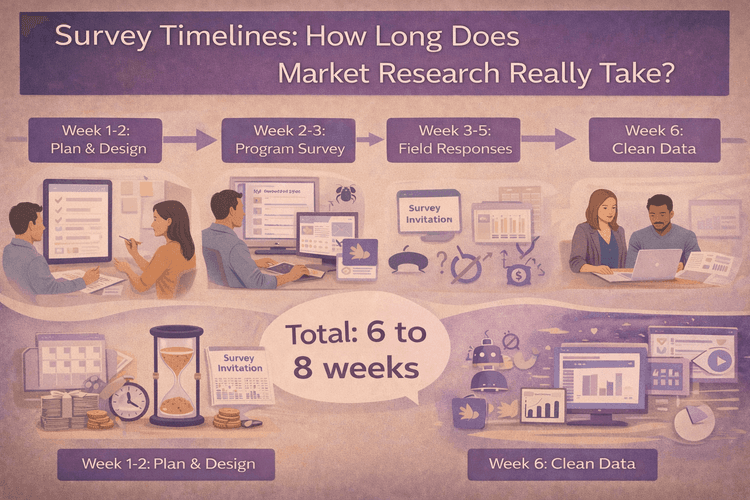
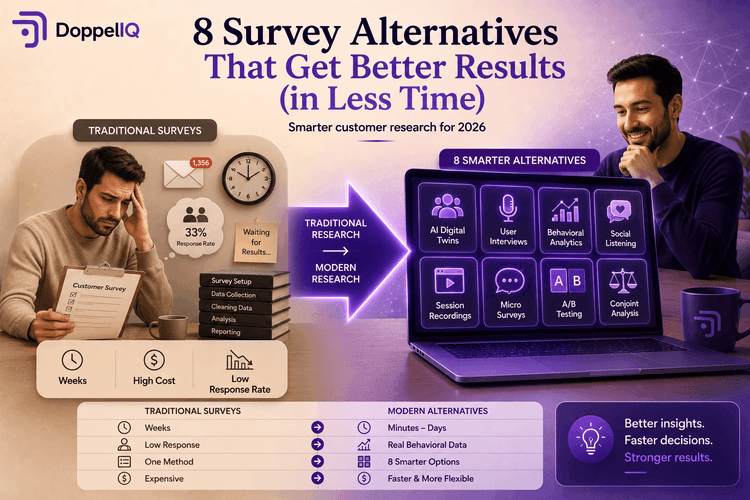
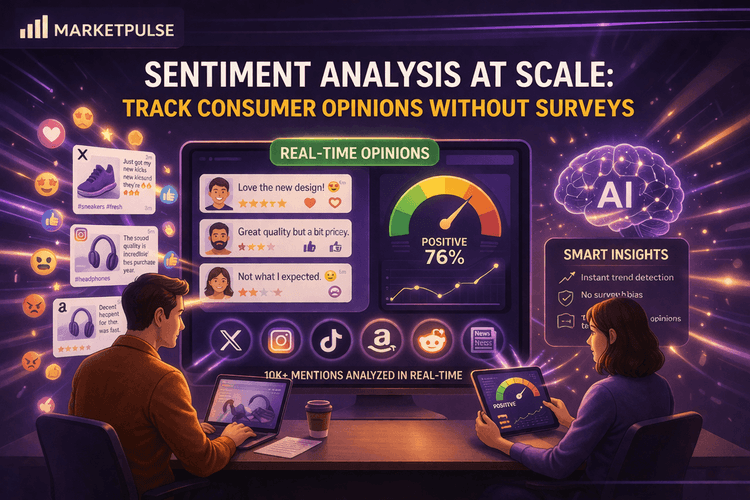
If you want a side-by-side look at how all these research options actually stack up, this breakdown of the top consumer research platforms compared for 2025 and this list of survey alternatives that get better results are both worth a look. There is also a helpful roundup of the best survey tools for 2026 if you are still running some surveys alongside your twin, plus a quick read on typical survey timelines so you know what you are comparing against. For teams doing research at real scale, this piece on population-scale consumer research and this guide to sentiment analysis at scale are great next reads, along with this look at how virtual focus groups deliver insights in minutes with AI participants.
Quick comparison table
| Method | Typical Cost | How Long It Takes | Built From |
|---|---|---|---|
| Traditional focus group | $45,000 to $85,000 | 4 to 8 weeks | Live people in a room |
| Online survey | Varies, often underestimated | 1 to 3 weeks | Whoever responds |
| Generic AI focus group | Low cost | Hours to days | Internet training data |
| DoppelIQ digital twin | Free to start | Minutes per question | Your real customer data |
FAQs
What is a focus group alternative?
Any faster, cheaper way to get honest customer answers without booking a room full of strangers and waiting weeks.
Is a digital twin the same as a chatbot?
No. A chatbot guesses answers from general knowledge. A digital twin is built from your actual customer data, so its answers reflect real behavior. Also, AI hallucinates and cant be scaled up, unlike Digital twins which are grounded exclusively to that single customer data it is simulating.
How accurate are digital twins?
Well-built twins have matched real customer survey results with high accuracy, especially when they are built from real purchase and CRM data instead of guesses.
Can a digital twin fully replace surveys?
Not entirely. It is great for fast, repeatable questions. Totally new, unexpected discoveries are still better found through human research.
How fast can I get answers from a digital twin?
Once it is set up, most questions get answered in minutes, not weeks.
Do I need a data team to use this?
No. Once your data is connected, you can ask questions in plain English, just like texting a coworker.
Ready to see it for yourself?
The best way to know if a digital twin actually understands your customers is to try it on your own data, not a demo. Sign up free at DoppelIQ.ai and run a pilot with your own customers. Compare it to your last survey or focus group and see the difference for yourself before you decide what to use next.
Related Articles

How beauty brands use digital customer twins to get insights and win in a competitive segment
 Ankur Mandal
Customer digital twins vs focus groups vs ChatGPT: Concept testing in market research
Ankur Mandal


Population-Scale Consumer Research: How 100,000 AI Twins Beat 1,000 Survey Responses
Nehan Mumtaz
Digital Twin Accuracy: Can AI Really Predict Consumer Behavior? (2026 Benchmark Data)
Nehan Mumtaz
Concept Testing Without Surveys: How AI Simulation Unlocks Your Full Product Potential
Nehan Mumtaz
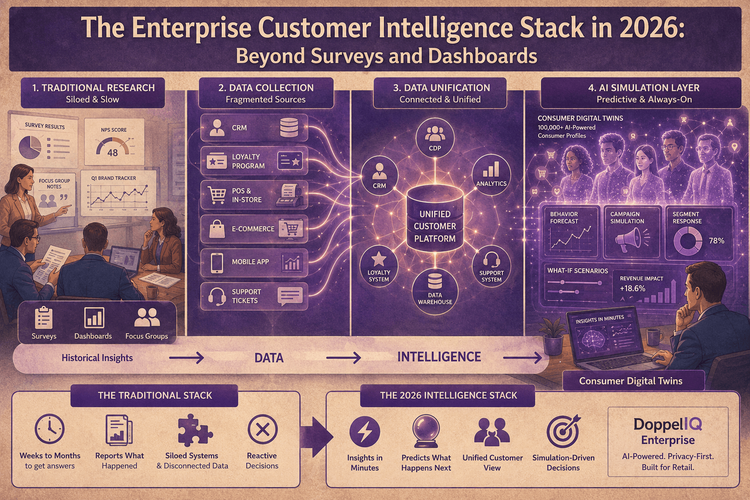
The Enterprise Customer Intelligence Stack in 2026: Beyond Surveys and Dashboards
Nehan Mumtaz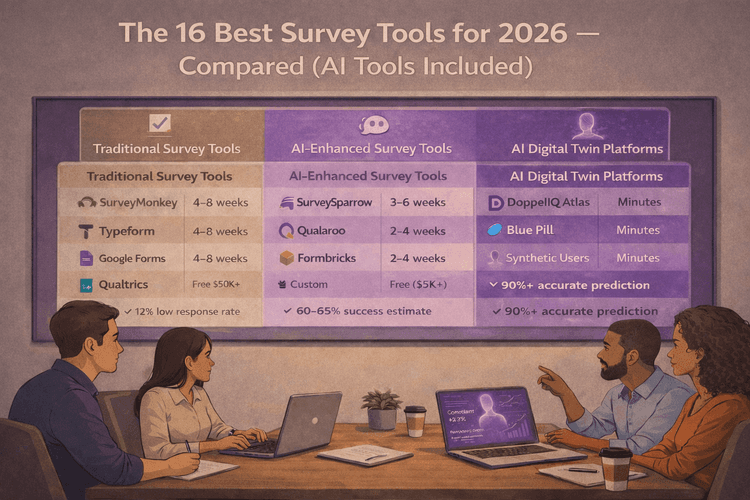
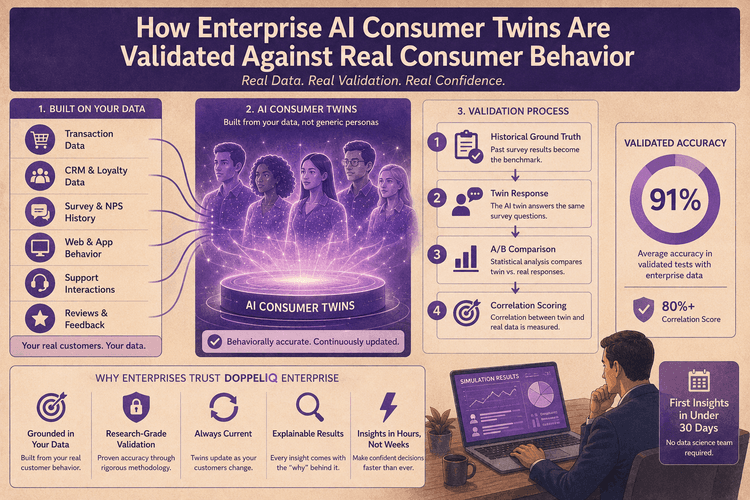
How Enterprise AI Consumer Twins Are Validated Against Real Consumer Behavior
Nehan Mumtaz