
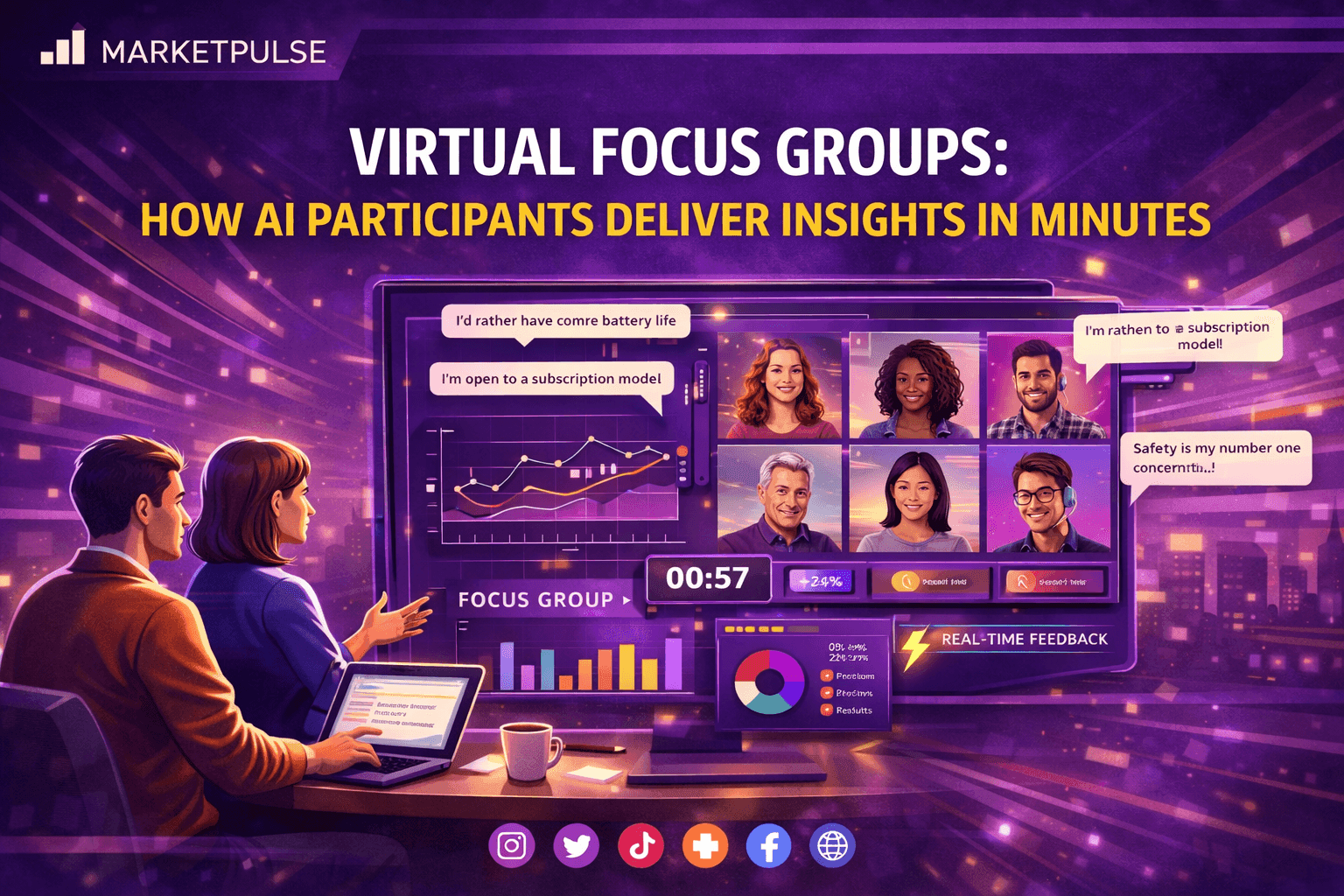
Virtual Focus Groups: How AI Participants Deliver Insights in Minutes
 Nehan Mumtaz
You have a new product idea. Maybe it is a new flavor, a newad campaign, or a new store layout. You want to know what real people thinkbefore you spend money on it.
The old answer was a focus group. Get 8 to 12 people in a room, ask them questions, and watch how they react. Smart idea. But here is thereality for most retail marketing teams today:
• It takes 3 to 6 weeks to recruit and run a focus group
• It costs between $6,000 and $30,000 per session
• You only hear from a small handful of people
• By the time you get results, the window to act hasoften passed
That is not a research problem. That is a speed problem. Andin retail, speed is everything.
This is where virtual focus groups and AI-powered consumersimulations are changing the game for marketing teams. They are related ideasbut not the same thing, and that difference matters. Let us walk through whateach one is, how Atlas fits in, and when you should use it.
What Is a Virtual Focus Group?
A virtual focus group is a consumer research session conductedonline instead of in a physical room. Participants join from their phones orlaptops, answer questions, react to concepts, and share opinions. Crucially,they interact with each other and with a moderator. That back-and-forthconversation between participants is what makes it a focus group.
Virtual focus groups have been around for a while. Platformslike Zoom, online focus group tools, and video chatpanels brought research online. That helped with scheduling and geography. Butit did not fix the bigger problems: cost, time, scale, and the fact that youstill needed real people to show up and talk to each other. Atlas worksdifferently. It is not a focus group tool. It is a consumer simulation platform, and understanding that difference is what this article is reallyabout.
Then came AI.
What Focus Groups Are Good At (And What They Are Not)
Focus groups are genuinely useful. Think of them like a tastetest at a grocery store. You put something in front of a real person and watchtheir face. You cannot fake that reaction. That live, in-the-moment response ishard to get any other way.
| What Focus Groups Do Well | Where They Fall Short |
|---|---|
| Explore emotional reactions to ideas | Too slow for fast-moving campaigns |
| Uncover language consumers actually use | Too expensive to run on every hypothesis |
| See how different consumer cohorts respond to the same idea independently | Small sample size (8 to 12 people) |
| Dig deep into the 'why' behind opinions | Groupthink: loud voices drown out quieter ones |
| Test packaging, concepts, and messaging | Social desirability bias skews answers |
The real problem is not that focus groups are bad. The problemis that they are expensive enough that most teams can only afford to run themafter they have already narrowed down their ideas. Which means most ideas neverget tested at all.
That is a big business risk. You could be spending yourcampaign budget on the second-best idea simply because you could not afford totest the first five.
How AI Recreates Group Dynamics
Here is where things get interesting. Imagine if you couldtest all five ideas before committing to one. Not with a chatbot that makesthings up, but with a simulation built on real consumer data.
That is what Atlas does. Instead of recruiting realparticipants for each session, you query a nationwide panel of AI consumerprofiles built from actual survey data, behavioral patterns, and demographicinformation. Each profile responds independently, based on how that type ofconsumer genuinely thinks and behaves. Atlas does not simulate a room whereconsumers talk to each other. What it does instead is something more useful forearly-stage research: it lets you see how different consumer segments respondto the same idea at the same time, side by side, at a scale no traditionalfocus group can match.
The key word here is behavioral accuracy. Generic AI toolspredict what a person might say. A behaviorally grounded consumer simulationpredicts what that specific type of person, based on their real habits andattitudes, would actually do.
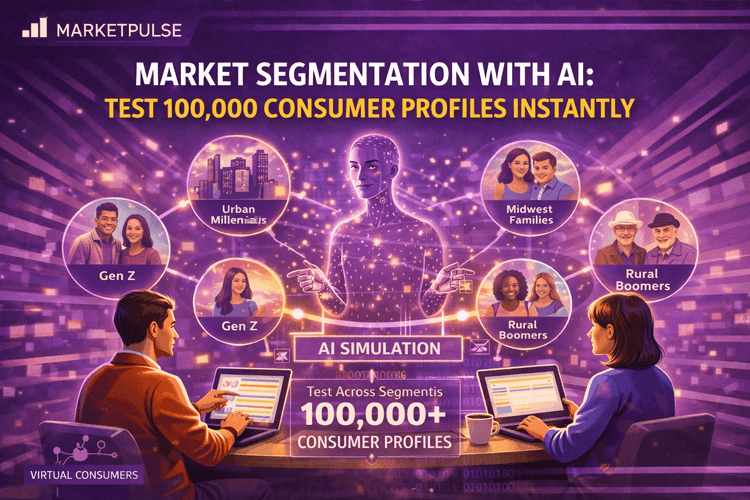
You can also query different segments at once. Ask the samequestion to suburban moms, Gen Z shoppers, and retirees at the same time. Seewhere their responses align and where they diverge. No moderator needed, noscheduling, no interaction between participants. Just clean, independentresponses from each consumer type, side by side. Learn more about how synthetic respondents are reshaping market research.
Speed vs. Depth: Understanding the Trade-Off
Atlas is not a focus group simulator. It does somethingdifferent and, for early-stage research, more practical. It lets you queryindividual consumer behavior across 100,000 profiles at once, so you can seehow specific types of people think, feel, and decide before you invest informal research. Think of it like this: before a chef puts a new dish on themenu, they taste-test it in the kitchen before it ever reaches a customer.Atlas is that kitchen test. It helps you figure out which ideas are worth takingfurther, so your real research budget goes toward the concepts that alreadyhave signal behind them.
| Atlas (AI Consumer Queries) | Traditional Focus Group | |
|---|---|---|
| Time to first insight | Minutes | 3 to 6 weeks |
| Cost per study | Fraction of traditional cost | $6,000 to $30,000+ |
| Sample size | 100,000+ consumer profiles | 8 to 12 participants |
| Bias risk | Low (no social pressure) | High (groupthink, moderator influence) |
| Best for | Querying individual consumer behavior at scale, fast exploration before committing | Validating final concepts in depth |
| Technical skill needed | None (plain language queries) | Trained moderator required |
The smarter workflow is to use both. Use Atlas first to queryindividual consumer reactions broadly across many ideas. Then take yourstrongest 1 or 2 directions to a real focus group for deep validation. You savetime, you save money, and you walk into your qualitative research alreadyknowing which direction has the most signal behind it.
Curious about how much traditional research really costs? Thisbreakdown of how much a survey really costs might surpriseyou.
The Problem With Traditional Research That Nobody Talks About
There is a silent killer in most research projects: bias. Notthe kind where someone is being dishonest on purpose. The kind that sneaks inbecause of how research is designed and run.
• Social desirability bias: People say what they thinksounds good, not what they actually feel
• Moderator bias: The way a question is asked shapes theanswer
• Groupthink: The first person to speak influenceseveryone else in the room
• Recruitment bias: The people who show up to focusgroups are often not representative of your real customers
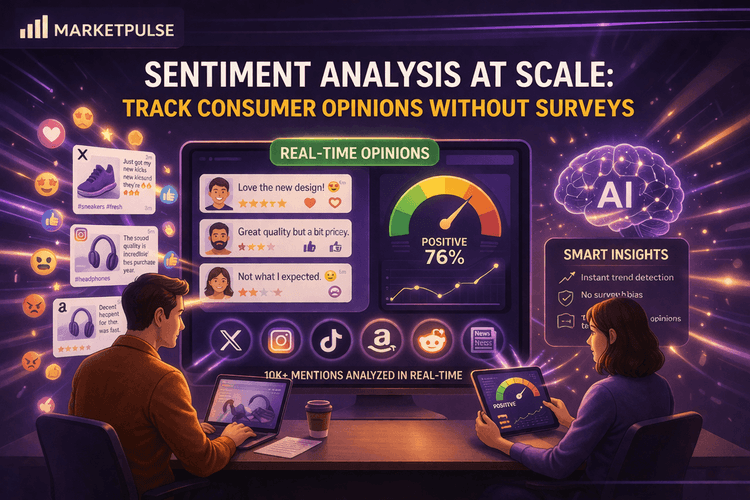
AI consumer simulations remove most of these pressuresentirely. There is no social pressure in a simulation. No dominant voice. Nomoderator tilting the conversation. Just clean, consistent responses groundedin behavioral data. For a deeper look at how bias ruins research data, readthis guide on 7 types of survey bias.
And if you have ever wondered why traditional surveys get suchlow response rates, this piece on why survey response rates are so low explainsexactly what is happening.
Meet DoppelIQ Atlas: A Population-Scale Consumer Simulation
DoppelIQAtlas is a prebuilt, population-scale AI consumer simulationplatform built specifically for teams that need fast, accurate consumerinsights without the wait.
Here is what makes it different from every other AI tool inthis space:
• 100,000+ representative US consumer profiles, alreadybuilt and ready to query
• Trained on national survey data, behavioral datasets,demographic distributions, and psychographic patterns
• No client data needed to get started. You sign up andstart asking questions immediately
• Benchmarked at approximately 80% correlation with realUS consumer survey outcomes
• Updates annually to stay aligned with current USconsumer norms
• Zero technical skill required. You ask questions inplain language, just like you would in a real interview
This is not an AI persona tool that gives you a fictional"Marketing Mary" profile. Atlas is a nationwide synthetic panel. Youare interacting with population-scale consumer behavior, not a made-upcharacter. Understand the difference between AI personas and true population-scale consumer research.
When to Use Atlas Focus Simulations
Atlas is built for the exploration phase of your research, thestage where most ideas either get tested quickly and improved or die quietlybecause nobody had the budget to check. Here are the most common use casesretail marketing teams run on Atlas:
| Use Case | What You Ask Atlas | What You Learn |
|---|---|---|
| Message testing | Which headline resonates more with millennial shoppers? | Which copy direction to pursue before ad spend |
| Concept testing | How would suburban families respond to this new product? | Adoption potential and likely objections |
| Campaign pre-flight | How do different age groups react to this creative direction? | Segment-level reactions before launch |
| Positioning research | How do consumers perceive this category vs. our competitors? | White space and perception gaps |
| Feature prioritization | Which product features matter most to US buyers under 35? | What to lead with in your launch |
| Sentiment and bias mapping | What biases shape trust in our brand among retirees? | Hidden friction points to address |
You can ask virtually any question you would ask in a realconsumer interview. The platform guides you in real time, suggesting ways tomake your questions more precise and flagging missing context.
For teams exploring concept testing without traditional surveys orlooking for smarter ways to do market segmentation with AI, Atlas is thefastest on-ramp available today.
The Recommended Workflow for Retail Marketing Teams
Here is the simple two-step process that gets you the best ofboth worlds:
• Step 1 - Use Atlas to explore. Test 3 to 5 ideas,messages, or concepts simultaneously. See which ones land across your keyconsumer segments. This takes minutes, not weeks.
• Step 2 - Take the winners to a real focus group ifdeeper validation is needed. Now you are not walking in blind. You know whichdirection has the most potential. Your qualitative research goes deeper anddelivers more value because you already know what questions to ask.
This approach is faster, cheaper, and smarter. You spend yourresearch budget where it matters most. And you stop letting good ideas diebecause you could not afford to test them.
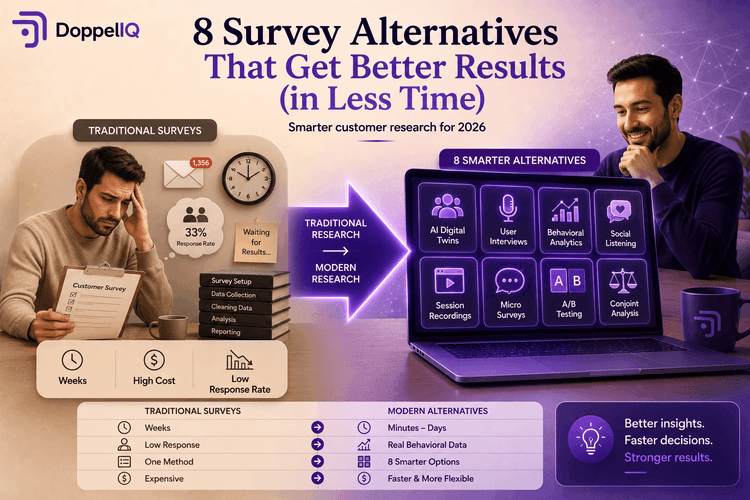
If you are looking at alternatives to traditional surveysaltogether, this roundup of 7 survey alternatives that get better resultsis worth reading. And if timelines are a concern, here is a realistic look at howlong surveys actually take.
For teams that want to go deeper on accuracy, this piece on whether AI can truly predict consumer behavioraddresses the key questions honestly. And if you want to understand the fullpotential of the technology, this complete guide to digital twin consumer researchis a great starting point.
You can also explore how instant consumer insights are replacing the old waitinggame across the research industry, and why forward-thinking teamsare moving toward the best survey tools available in 2026.
Frequently Asked Questions
What is a virtual focus group?
A virtual focus group is an online research session where realparticipants interact with each other and a moderator to share reactions. Atlasis different: it is a consumer simulation platform where you select a specificcohort and query their individual responses independently, with no participantinteraction involved.
How is Atlas different from a traditional focus group?
Traditional focus groups rely on real participants talking toeach other under a moderator. Atlas is a consumer simulation platform: you picka specific cohort, query their individual responses independently, and getresults in minutes. There is no participant interaction, no moderator, and noscheduling required.
Can Atlas replace a real focus group?
No, and Atlas does not try to. Focus groups are built onparticipant interaction and moderated conversation. Atlas gives you independentresponses from specific consumer cohorts at scale. They serve differentpurposes and work best when used together.
What is DoppelIQ Atlas?
Atlas is a prebuilt population-scale consumer simulationplatform with 100,000+ representative US consumer profiles. You sign up, askquestions in plain language, and get insights in minutes.
Do I need a data science team to use Atlas?
No. Atlas is built for marketing, insights, product, andstrategy teams. You ask questions the same way you would in a normal consumerconversation.
How accurate are the AI consumer profiles in Atlas?
Atlas benchmarks at approximately 91% correlation with real USconsumer survey outcomes, based on national-level survey data and behavioraldatasets.
How often does Atlas update its consumer profiles?
Atlas updates annually to reflect new US survey benchmarks andstay aligned with current consumer norms.
What kinds of questions can I ask Atlas?
Any question you would ask in a real consumer interview.Message testing, concept reactions, feature preferences, brand perception,purchase intent, and category sentiment are all common use cases.
What is the difference between Atlas and AI personas?
AI personas are fictional archetypes. Atlas is a nationwidesynthetic panel grounded in real population data, which gives you accuracy andbreadth that generic personas cannot match.
How quickly can I get my first insight from Atlas?
Most teams get their first actionable insight within minutesof signing up. No setup, no data import, no technical configuration required.
Most retail marketing teams have more ideas than they have budget to test. DoppelIQ Atlas gives you a 100,000-person US consumer panel, available right now, at no cost to get started.
Sign up for free. Ask your first question in minutes. No data science team needed.
Related Articles

How beauty brands use digital customer twins to get insights and win in a competitive segment
 Ankur Mandal
Customer digital twins vs focus groups vs ChatGPT: Concept testing in market research
Ankur Mandal


Population-Scale Consumer Research: How 100,000 AI Twins Beat 1,000 Survey Responses
Nehan Mumtaz
Digital Twin Accuracy: Can AI Really Predict Consumer Behavior? (2026 Benchmark Data)
Nehan Mumtaz
Focus Group Alternative: A Simple Guide to Getting Real Customer Answers Faster
Nehan Mumtaz
Concept Testing Without Surveys: How AI Simulation Unlocks Your Full Product Potential
Nehan Mumtaz
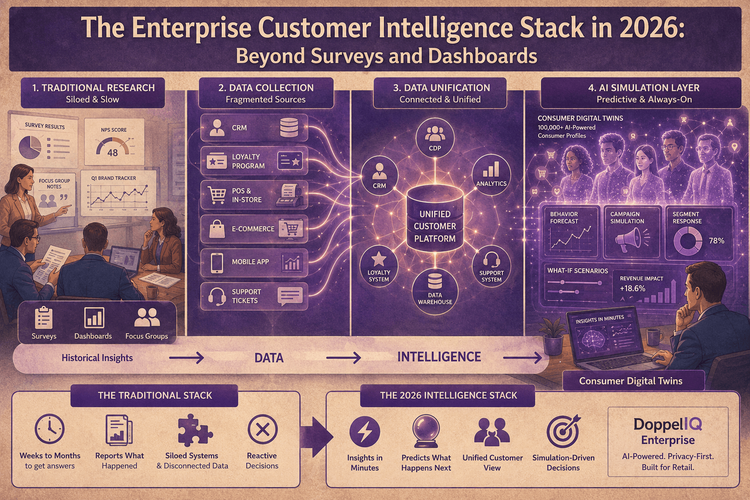
The Enterprise Customer Intelligence Stack in 2026: Beyond Surveys and Dashboards
Nehan Mumtaz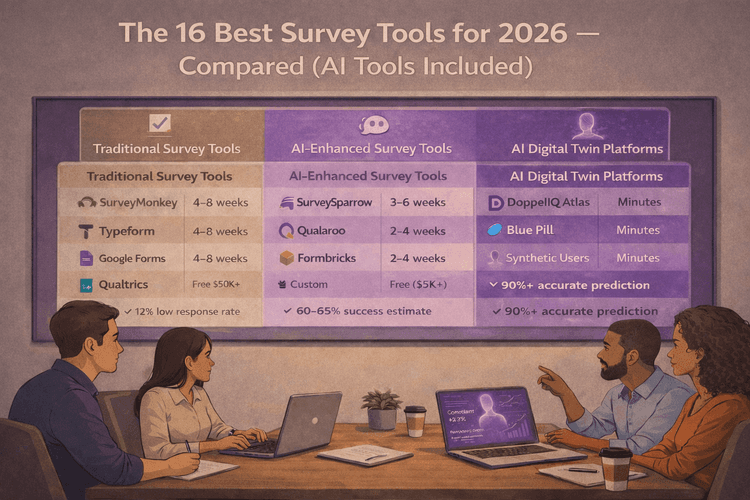
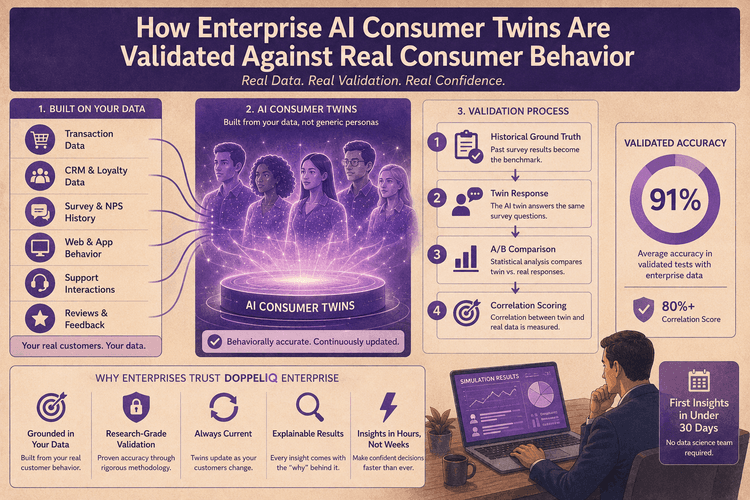
How Enterprise AI Consumer Twins Are Validated Against Real Consumer Behavior
Nehan Mumtaz