
From Command to Question: The Hidden Cost of Nike’s ‘Why Do It’ Pivot

Ankur Mandal
Founding Member
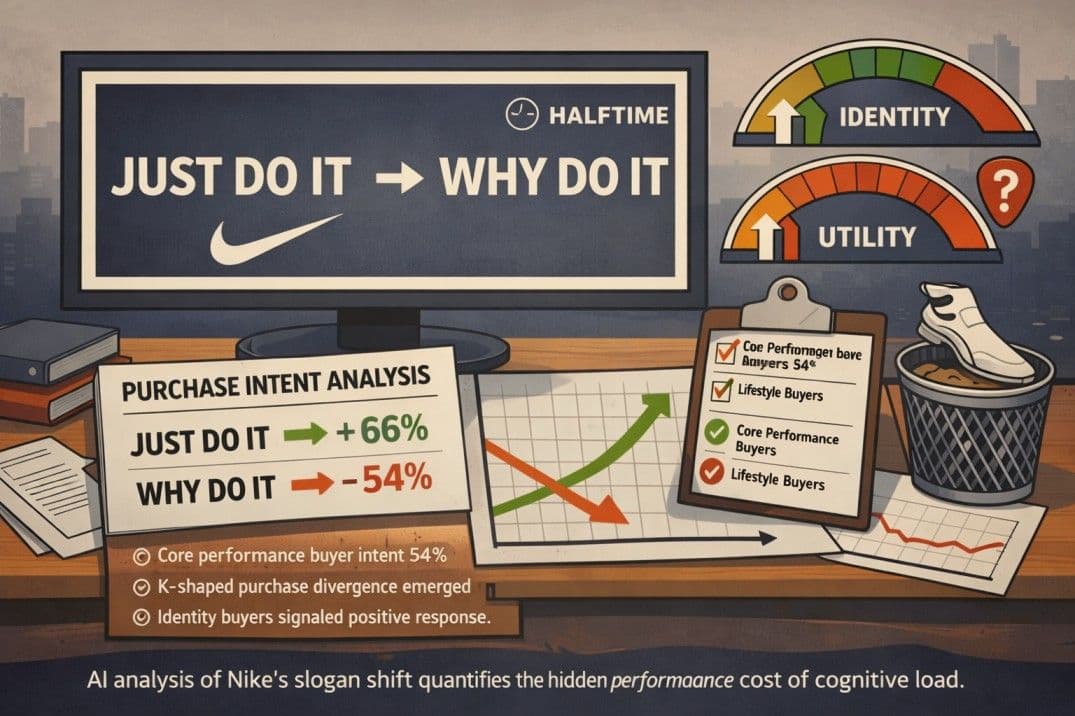
Executive Summary: Nike’s recent pivot from the imperative "Just Do It" to the inquisitive "Why Do It" is not merely a slogan change. It is a fundamental reversal of the brand's psychological utility. For forty years, Nike sold the absence of hesitation. With one campaign, they reintroduced it. This analysis uses AI Digital Twins to demonstrate how the introduction of cognitive load created a K-Shaped Behavioral Trend where lifestyle buyers engaged while purchase intent was suppressed by 54% among the brand’s most critical performance cohort.
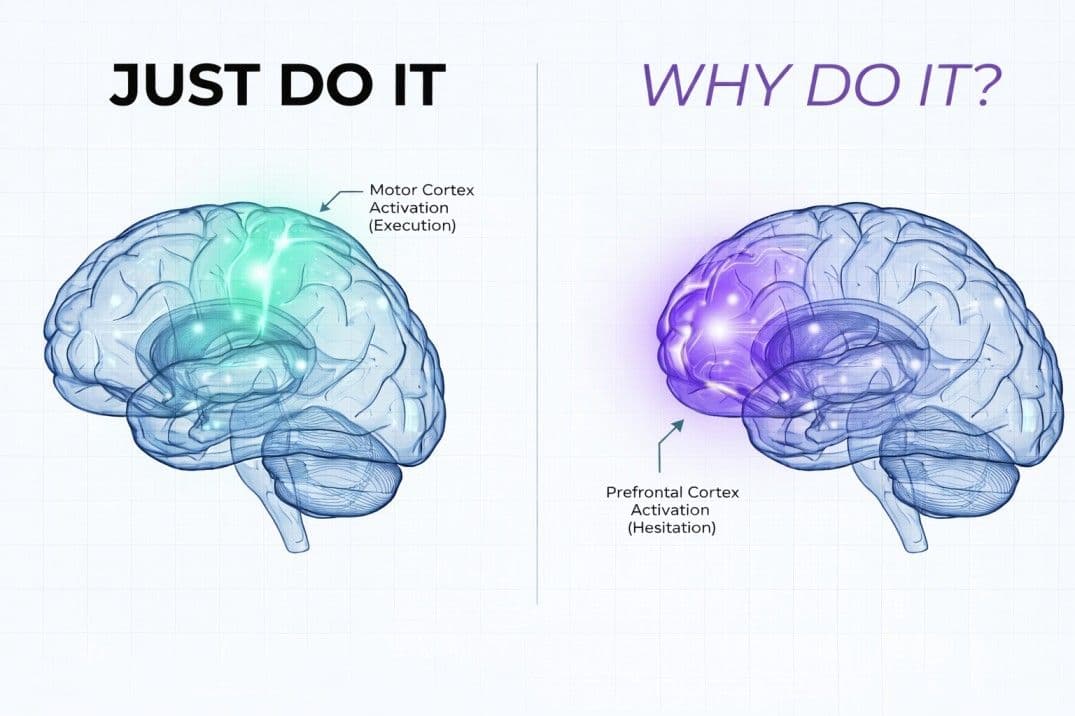
Introduction: The Enemy of Flow
In high-performance athletics, "thinking" is often the enemy. The sprinter does not think about their stride. They execute it. The linebacker does not contemplate the morality of the tackle. They make it. This state of non-thinking action is called Flow.
For decades, Nike was the brand of Flow. "Just Do It" was a psychological trigger designed to shut down the prefrontal cortex (the doubting, thinking brain) and activate the motor cortex (the doing brain). It was a command to stop thinking and start moving.
With the launch of "Why Do It," Nike violated its own prime directive. They asked the athlete to pause. To reflect. To think.
We analyzed this shift using DoppelIQ, simulating the behavioral response of 100 customer archetypes. The charts revealed three distinct trend lines that explain the stall.
- Reveals how Nike’s slogan change affected intent.
- Exposes the hidden cost of cognitive load that you may fail to capture.
- Shows how AI Digital Twins can surface behavioral risk before you hit the market.
Trend 1: The "Confusion" Spike (Cognitive Load)
The Question Asked: "Which consumer cohorts perceive the new slogan as inspiring vs. demotivating vs. confusing?"
The most revealing metric in our analysis was Cognitive Friction.
-
"Just Do It" (Low Cognitive Load): This is a closed loop. The instruction is clear. No processing is required. It provides Certainty.
-
"Why Do It" (High Cognitive Load): This is an open loop. The brain cannot ignore a question. It must stop, search for an answer, evaluate that answer, and then decide if it is valid.
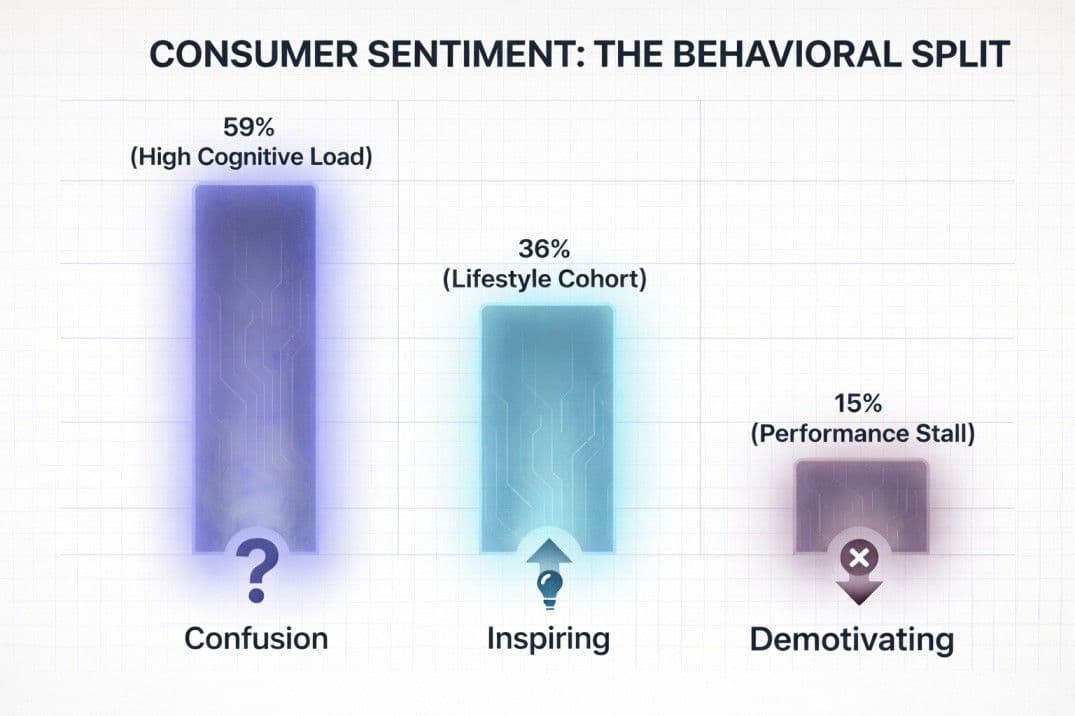
The Data Trend: When asked to categorize the campaign, the largest single cohort labeled it as "Confusing".
-
Visual Insight: The bar chart for "Confusion" towers over "Demotivating" (15 respondents) and "Inspiring" (36 respondents).
-
The Behavioral Reality: In a performance context, ambiguity looks like hesitation. The 59% "Confusion" score isn't a failure of intelligence. It is a failure of Speed. Nike introduced a speed bump on the track.
Trend 2: The "Redirection" Effect (Brand Association)
The Question Asked: "Does 'Why Do It' dilute, strengthen, or redirect the brand’s association with athleticism, grit, and performance?"
Did this campaign strengthen the brand or dilute it? The data shows it did neither. It moved it.
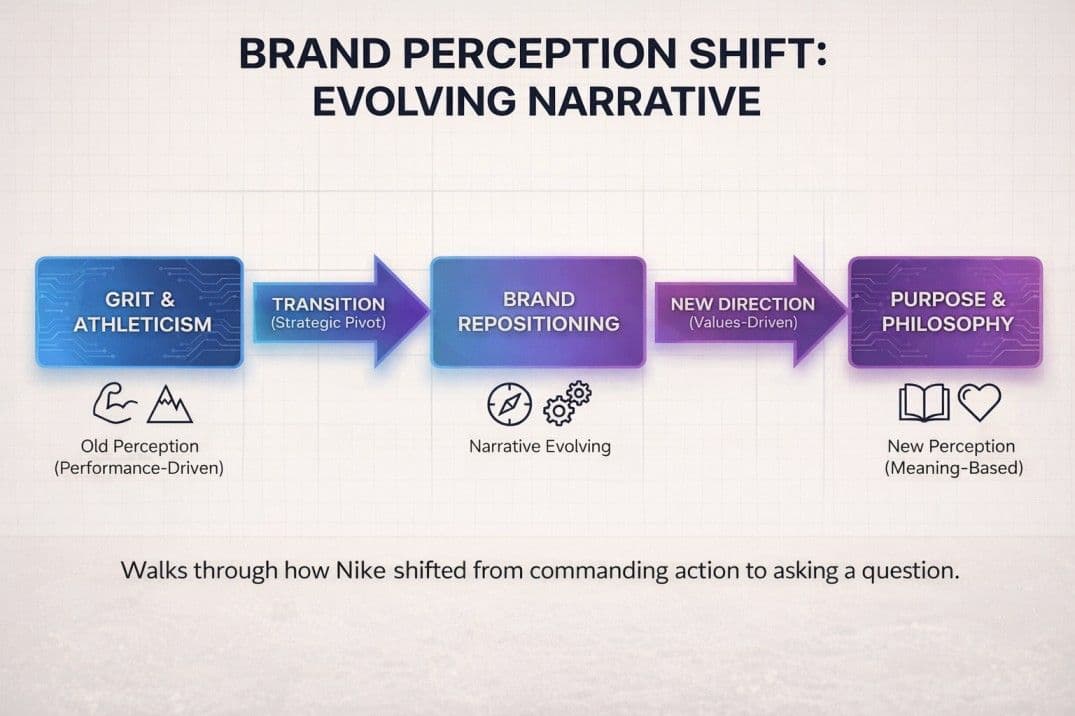 The Data Trend: 62% of our Digital Twins felt the slogan "Redirected" the brand away from its core association with grit and athleticism.
-
Visual Insight: Only 7% felt it "Diluted" the brand, but only 31% felt it "Strengthened" it. The dominant trend is lateral movement.
-
The Tribal Breach: This confirms a breach of the "Tribal Contract." The Nike tribe is built on shared suffering and triumph (Grit). The new campaign pivoted the tribe toward shared reflection (Purpose). While noble, it effectively alienated the members who joined for the grit.
Trend 3: The K-Shaped Purchase Split
The Question Asked: "How does exposure to the new slogan affect purchase intent across key categories (running, training, lifestyle)?"
The simulation exposed a deep fracture in the Nike customer base, separating those who buy the brand for Identity from those who buy it for Utility.
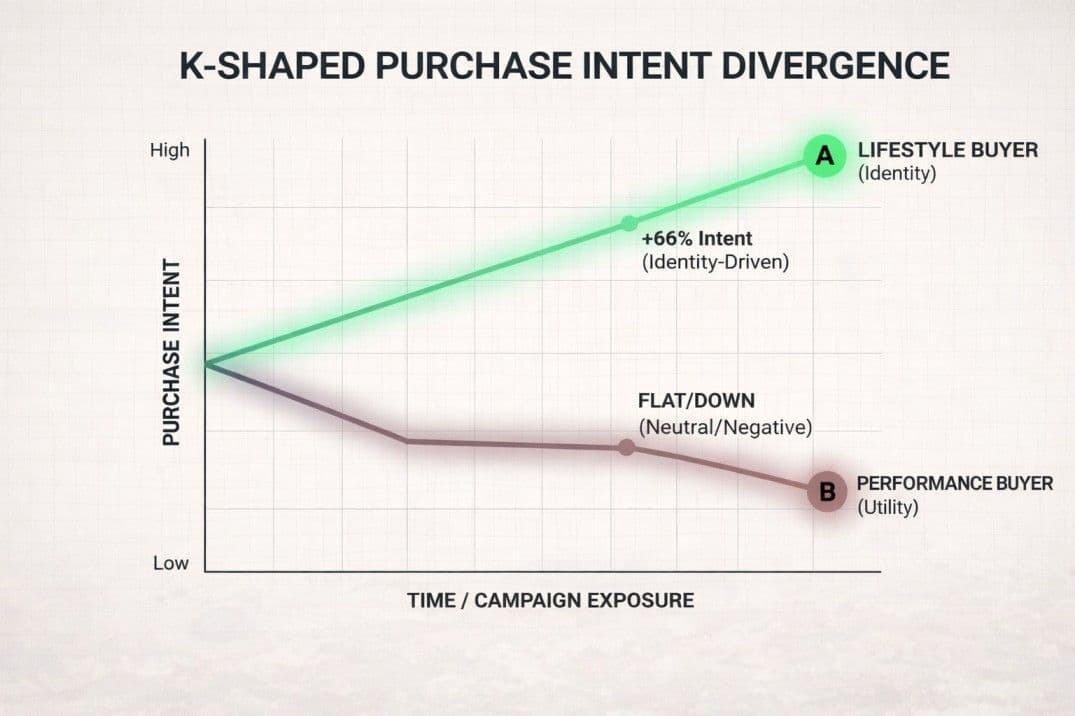 The Data Trend: We observed a K-Shaped divergence in Purchase Intent.
-
The Identity Buyer (Lifestyle/Athleisure): Trend UP.
- 66 out of 100 respondents in this category indicated increased purchase intent. For them, "thinking" is a feature. They want to reflect on their identity.
-
The Utility Buyer (Running/Training): Trend FLAT/DOWN.
-
54 out of 100 respondents in the performance category showed neutral or negative purchase intent.
-
The Insight: This group operates on Authority. They want a Coach. A Coach tells you what to do. A Coach does not ask you why you are doing it.
-
Trend 4: The "Safety" Plateau (Emotional Impact)
The Questions Asked:
-
"How does the new positioning perform across sentiment buckets?"
-
"Does the slogan trigger negative emotion spikes or cultural misalignment?"
Finally, we looked for toxicity. Did the campaign offend anyone?
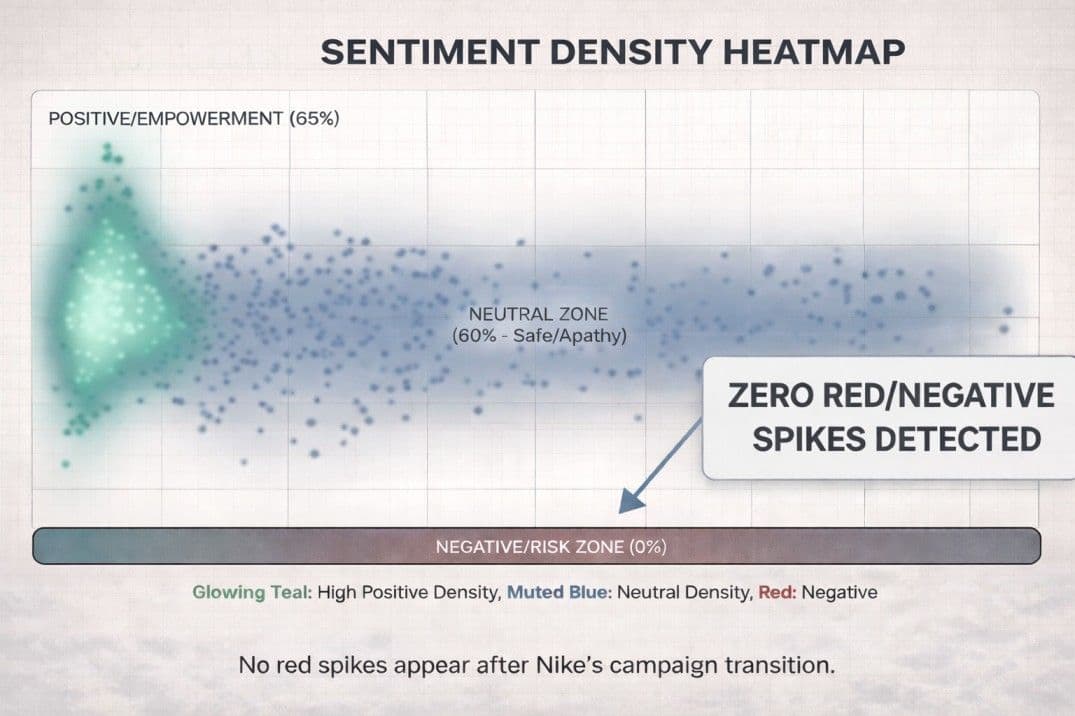 The Data Trend:
-
Cultural Misalignment: Zero negative spikes were reported. 60% of sentiment was "Neutral".
-
Sentiment Buckets: 65% felt "Empowerment," but 11% felt "Skepticism".
-
Visual Insight: The charts show a "Safe" campaign. Unlike controversial risks, this campaign didn't trigger anger. It triggered apathy in the performance sector. It was "culturally safe" but "motivationally empty" for the grinder.
The Strategic Error: Misplacing the Brain
Nike’s mistake was assuming that the "thinking" brain is always the "buying" brain.
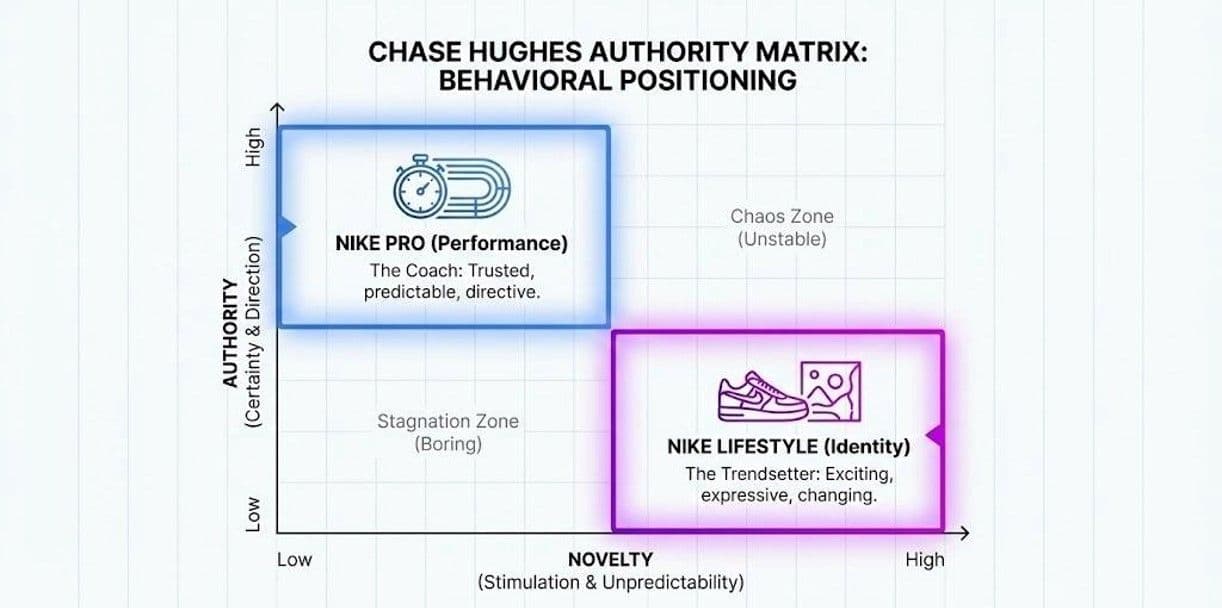 In luxury or lifestyle (like Nike Sportswear), engaging the thinking brain is good. You want the customer to contemplate the craft, the heritage, and the feeling.
In performance (Nike Pro), engaging the thinking brain is fatal. You want the customer to act on instinct. You want to be the weapon they pick up without thinking.
The DoppelIQ Pre-Mortem would have flagged this mismatch immediately:
"Warning: You are deploying a High-Cognitive-Load message ('Why') to a Low-Cognitive-Load audience (Performance Athletes). This creates friction. Restrict this messaging to Lifestyle channels only."
Conclusion: Return to the Imperative
There is a time for philosophy, and there is a time for action. Nike owns "Action." By trying to own "Philosophy," they rented space in a crowded room and left their own house empty.
The lesson for modern CMOs is clear: Do not confuse depth with effectiveness. Sometimes, your customer doesn't want to have a conversation. They just want to get to work.
Enough thinking. Just do it.
Get DoppelIQ Insights Directly in your Inbox
Stay updated with our latest research, insights, and industry trends delivered straight to your inbox.